What Exactly Are Veneers?
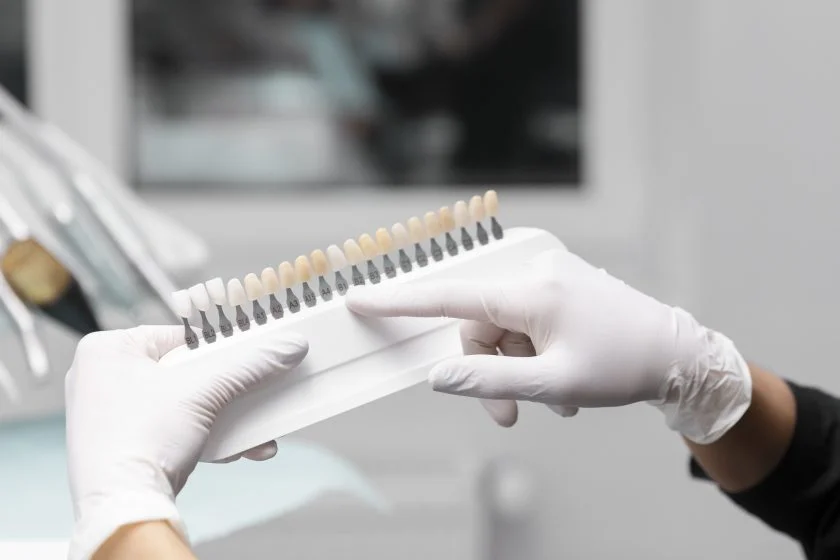
Dental veneers function as customized dental shells which dentists use to create wafer-thin surfaces that cover the front teeth of patients. The treatment functions as premium dental “false nails” which dentists produce using strong medical-grade ceramic and composite resin materials. The dental materials are attached to teeth surfaces to modify their appearance through color and shape and size and length alterations.
Most patients choose veneers to correct:
- Deep Discoloration: Stains caused by root canals, tetracyclines, or fluorides that cannot be corrected with traditional whitening.
- Wear and Tear: Teeth that have been ground down due to grinding or age.
- Structural Damage: Chipped, cracked, or broken teeth.
- Minor Alignment Issues: Small gaps between teeth, or teeth that are slightly crooked, often called “instant orthodontics.
The Pros: Why Veneers Are a Top Choice
- A Natural, Aesthetic Result One of the most significant advantages of porcelain veneers is that they have “biomimetic” properties. This means that the way that the porcelain reacts with light is similar to the natural tooth enamel. This makes for an extremely realistic result. Unlike older materials, new porcelains do not have that flat or opaque look that older materials have.
- Extreme Stain Resistance Unlike natural tooth enamel, which is prone to staining from coffee, tea, or red wine, the porcelain is non-porous. This means that the new smile will not stain, and the need for any kind of sensitive teeth whiteners will not be required.
- Minimal Recovery Time After the permanent veneers are bonded to your teeth, the “recovery” process is almost instantaneous. Except for a little sensitivity to hot and cold foods for a day or two, you can leave the office and immediately begin showing off your new look.
- Durability and Strength Veneers are very thin, but when bonded to a healthy tooth structure, they can become incredibly strong. They can withstand all of the normal functions of eating and speaking just as well as your own natural teeth.
The Cons: Important Considerations Choice
- The Process is Irreversible To ensure that they don’t look bulky or “thick,” a dentist has to remove a certain amount of enamel, about 0.5 mm, from the tooth surface. Once it’s gone, it’s gone for good. This means that for the rest of your life, you will always need to have some form of restoration on these teeth.
- Increased Tooth Sensitivity Because a layer of enamel has been removed, a layer of dentin, which contains nerve pathways, is now exposed. Some patients experience an increase in sensitivity to extreme temperatures. This eventually goes away after the bonding process is complete, but for a small percentage of people, it can become a lingering problem.
- Significant Financial Investment Veneers are a luxury product and are seldom insured by dental insurance companies. The cost of a porcelain veneer, depending on where you reside and the expertise level of your dentist, can be substantial for a single veneer. The total cost can be a significant financial investment, similar to that of a mid-range automobile.
- Fragility Under Abnormal Pressure While veneers are strong, they are not indestructible. If you are a nail-biter, ice-chomper, or grind your teeth at night, you are at a significant risk of chipping or de-bonding the porcelain surface. Unlike a real tooth, if a porcelain veneer chips, it cannot be repaired, and a new veneer is required.
Longevity: How Long Do They Last?
One of the most common questions is: “Will I have to do this again?” The answer is yes, eventually, but not for a long time if you care for them properly.
On average, porcelain veneers last between 10 and 15 years. With exceptional care and healthy gum tissue, some patients can stretch that to 20 years. Composite veneers (a cheaper, resin-based alternative) typically have a shorter lifespan of about 5 to 7 years and are more prone to staining and chipping over time.
How to extend the life of your veneers:
- Wear A Nightguard: If you are a teeth grinder, then it is imperative that you get a nightguard. Otherwise, the porcelain veneer will surely crack under the tremendous pressure of grinding.
- No Using Your Teeth as Tools: No using teeth for opening packages, biting on seeds, or chewing on pens.
- Gum Care: Although the veneer will not decay, the tooth it is on or the gums it is in can. Receding gums can expose the edge of the veneer, creating an unattractive demarcation line.
Conclusion: Is it the Right Move?
People with healthy teeth and gums who want to improve their smile appearance should consider veneers as their best option. The treatment provides a complete makeover which enhances facial attractiveness and boosts self-assurance. The procedure needs lifelong dental upkeep because it requires permanent removal of tooth enamel.
A successful experience depends on performing both a complete consultation and a “diagnostic wax-up” process. You can view a 3D representation of your upcoming smile transformation which will occur after your natural teeth undergo changes. The procedure offers beautiful outcomes but you need to decide whether you want permanent changes or not, which will determine your happiness for at least ten years.